


Introduction
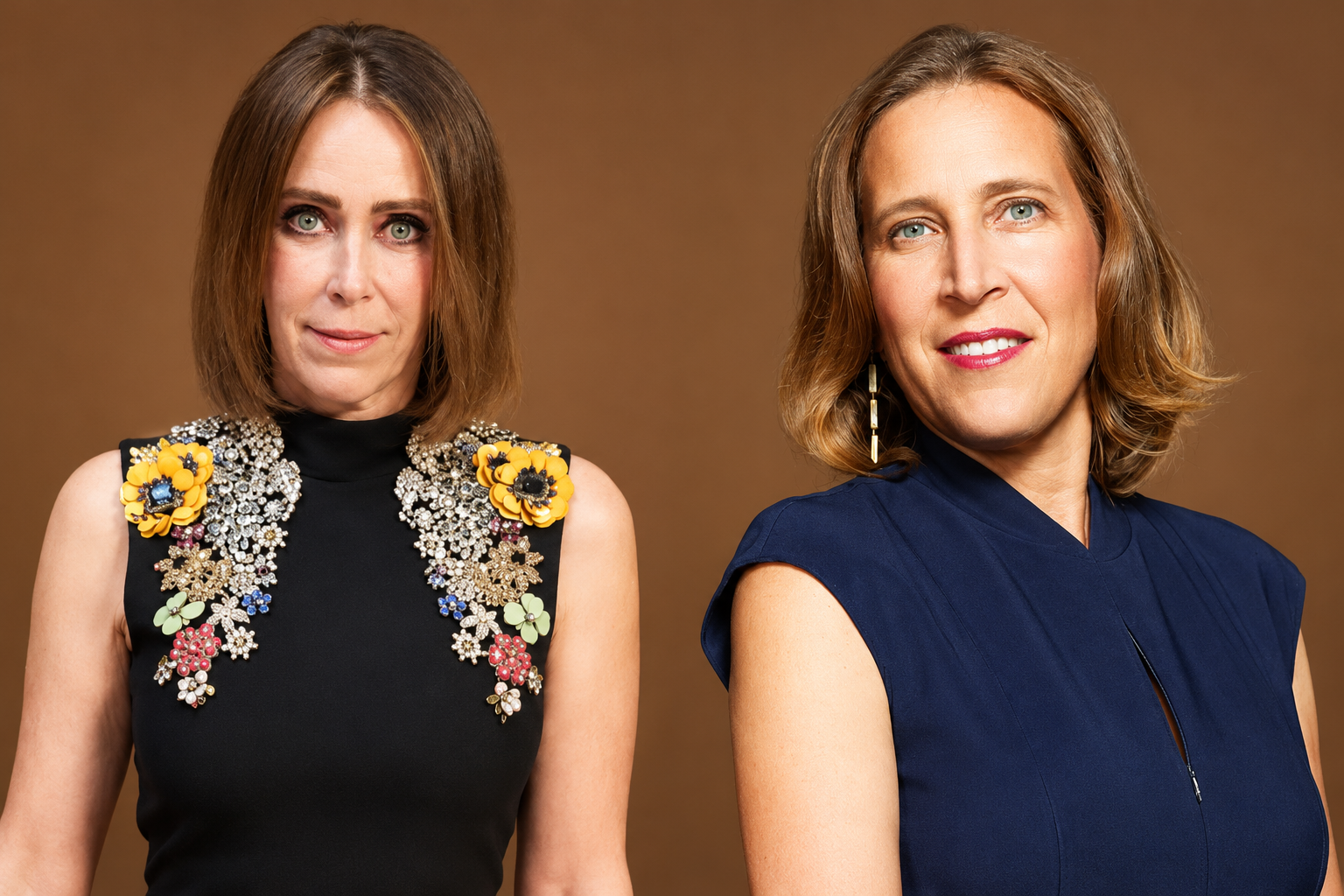
María Asunción Aramburuzabala and Susan Wojcicki were influential women who achieved remarkable success in different areas of the business world. Aramburuzabala built her reputation through investment management, entrepreneurship, and financial strategy, while Wojcicki became one of the most recognized leaders in the technology industry through her work at Google and YouTube.
Although their professional paths were different, both demonstrated how strategic thinking, determination, and strong leadership can create lasting business influence. Their careers also provide valuable lessons about innovation, adapting to change, and creating opportunities for future generations.
Who Is María Asunción Aramburuzabala?
María Asunción Aramburuzabala Larregui is a Mexican businesswoman and investor born on May 2, 1963, in Mexico City. She comes from a family associated with Grupo Modelo, the Mexican brewing company known internationally for brands such as Corona. Her grandfather, Félix Aramburuzabala, was one of the brewery’s co-founders.
She studied accounting at the Instituto Tecnológico Autónomo de México (ITAM). Her educational background helped provide a foundation for understanding financial management, corporate strategy, and investment decisions.
Following the death of her father, Pablo Aramburuzabala, in 1995, she became more actively involved in protecting and managing her family’s business interests. Rather than depending entirely on the family’s traditional brewing business, she pursued opportunities to diversify investments and expand into additional industries.
Career and Business Achievements
One of the most important developments in Aramburuzabala’s career was the creation of Tresalia Capital in 1996. The investment firm became a central vehicle for managing and diversifying the family’s wealth.
Her investment interests have extended across several industries, including:
- Financial services and banking
- Technology and telecommunications
- Real estate and property development
- Consumer products and retail
- Startups and emerging businesses
A major turning point came in 2013, when Anheuser-Busch InBev completed its acquisition of Grupo Modelo. The transaction was valued at approximately $20 billion and enabled the family’s interests in the brewing company to be converted into financial resources for further investment.
Through Tresalia Capital, Aramburuzabala has supported businesses at different stages of development. The firm’s investment portfolio has included technology companies, consumer brands, and entrepreneurial ventures. Its real estate activities have also expanded through ABILIA, a property development business.
Her career demonstrates the importance of looking beyond a single source of wealth and identifying opportunities across multiple sectors.
Who Was Susan Wojcicki?
Susan Diane Wojcicki was an American technology executive born on July 5, 1968, in Santa Clara County, California. She became one of the most influential women in Silicon Valley through her leadership at Google and YouTube.
Wojcicki studied history and literature at Harvard University, earned a master’s degree in economics from the University of California, Santa Cruz, and completed an MBA at UCLA Anderson School of Management.
Her educational background combined analytical thinking, economics, and business administration. These skills later helped her contribute to the development of digital advertising and online platforms.
In 1998, Google co-founders Larry Page and Sergey Brin worked in a garage associated with Wojcicki’s property while developing their company. She joined Google in 1999 as its first marketing manager, becoming one of its earliest employees.
Her career grew alongside the expansion of the internet, and she played a significant role in developing Google’s advertising operations and consumer products.
Susan Wojcicki’s Career at Google and YouTube
During her time at Google, Wojcicki contributed to products and services that helped transform the company’s commercial model. She worked on advertising platforms, including AdWords and AdSense, which enabled businesses to reach online audiences and helped publishers generate revenue from digital content.
She also supported Google’s acquisition of YouTube in 2006. The purchase became an important milestone in the development of online video and digital entertainment.
In February 2014, Wojcicki became CEO of YouTube. She held the position until 2023, overseeing a period of substantial growth and change for the platform.
Under her leadership, YouTube expanded its global reach, developed new advertising opportunities, and invested in services for creators and viewers. YouTube also continued to face difficult questions about misinformation, copyright, harmful content, and the responsibility of large digital platforms.
Wojcicki stepped down in 2023 to focus on her family, health, and personal projects. She died on August 9, 2024, at the age of 56 after living with non-small-cell lung cancer.
Her contributions to technology and her advocacy for women in the workplace remain important parts of her legacy.
Comparison Table
The following table highlights the main differences and similarities between these two influential businesswomen.
| Category | María Asunción Aramburuzabala | Susan Wojcicki |
|---|---|---|
| Nationality | Mexican | American |
| Main industry | Investment and finance | Technology and digital media |
| Education | Accounting at ITAM | Harvard, UC Santa Cruz, and UCLA |
| Major organization | Tresalia Capital | Google and YouTube |
| Main professional role | Investor and business leader | Technology executive |
| Major achievement | Diversifying family wealth through investments | Helping expand Google’s business and YouTube |
| Leadership approach | Investment strategy and portfolio diversification | Product development, innovation, and platform growth |
| Lasting influence | Investment and entrepreneurship | Digital communication and online video |
Leadership Styles and Business Strategies
The careers of these women illustrate two different approaches to achieving business success.
Aramburuzabala’s strategy centers on financial planning, diversification, and identifying promising investment opportunities. Her work through Tresalia Capital shows how businesses can reduce dependence on a single industry by allocating resources across different markets.
Wojcicki’s leadership was closely connected to innovation and the growth of digital products. At Google, she helped develop advertising systems that connected companies with online customers. At YouTube, she managed a global platform serving creators, advertisers, and billions of viewers.
Their approaches differed, but both required careful decision-making, long-term planning, and the ability to respond to changing market conditions.
Challenges and Professional Lessons
Both women operated in highly competitive environments.
Aramburuzabala faced the challenge of preserving family business interests while expanding into unfamiliar industries. Successful diversification required evaluating risks, selecting investments, and responding to changing economic conditions.
Wojcicki faced the challenges of managing rapidly growing technology platforms. Online video created enormous opportunities, but it also introduced complex issues involving content moderation, user safety, advertising, and public trust.
Their experiences offer several useful lessons:
- Think long term: Sustainable success often requires decisions that extend beyond immediate profits.
- Adapt to change: Businesses must respond to new technologies, market conditions, and customer expectations.
- Invest strategically: Financial resources are most effective when supported by careful research and planning.
- Build strong teams: Large organizations depend on capable people who can collaborate toward shared goals.
- Recognize responsibility: Business leadership involves considering the wider effects of corporate decisions.
Influence on Women in Business
María Asunción Aramburuzabala has helped demonstrate that women can occupy influential positions in investment management and corporate governance. Her participation in major business organizations has challenged traditional expectations in industries where leadership roles have historically been dominated by men.
Susan Wojcicki became a prominent example of female leadership in the technology sector. She also advocated for greater representation of women in technology and supported discussions about parental leave and workplace policies.
Their careers illustrate that women can influence economic development through different routes, whether by allocating capital, developing technology, or leading major organizations.
Conclusion
María Asunción Aramburuzabala and Susan Wojcicki built influential careers through different professional strengths. Aramburuzabala established herself as an investor who expanded her family’s business interests into multiple industries, while Wojcicki helped shape the digital economy through her work at Google and YouTube.
Their stories show that business success is not limited to one industry or leadership style. Strategic investment, innovation, adaptability, and a commitment to professional growth can all create meaningful results.
Although their careers followed different paths, both women left important marks on their respective fields. Their experiences continue to offer valuable lessons for entrepreneurs, investors, executives, and young professionals seeking to build successful careers.
