


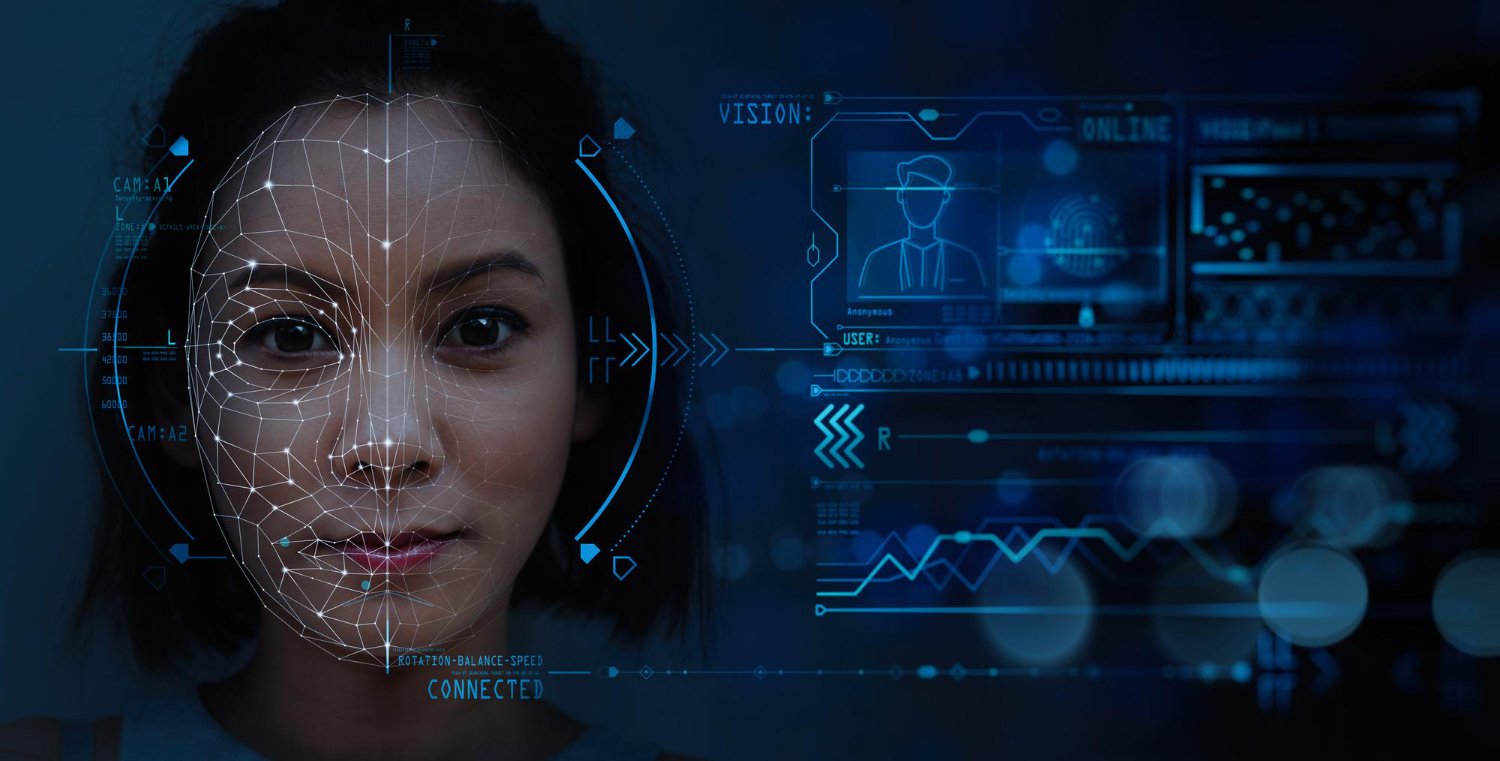
Facial recognition has become a powerful asset in identity verification systems due to enhanced security and a smooth user experience. It is defined as a method of ID validation that confirms the user’s identity by utilizing advanced algorithms. An automated system evaluates the images or videos and compares the facial characteristics with the existing database. If the images correspond to the known database, the individual’s identity is authenticated.
Because of the system’s precision and efficiency, facial recognition technology is utilized in video monitoring systems and automatic image cataloging. Face recognition technology has gained traction across multiple fields including law enforcement, healthcare, access control, fintech, retail, and security and surveillance, accurately confirming identities.
Working Mechanism of the Technology
Facial recognition technology uses an artificial neural network referred to as a convolutional neural network (CNN), capable of identifying facial characteristics in images and is primarily used for image recognition. The automated system is created and built upon the complex structure and operation of the human brain.
- Face Detection: This process resembles spotting a friend’s face in a group photograph. It entails identifying the face within a large image and distinguishing it from other elements present in the picture.
- After a face is identified, the subsequent phase entails examining the facial characteristics according to facial geometry. Face analysis assesses various points of interest or facial regions such as the form of the jawline, the spacing between the eyes, the nose’s tip, or the mouth’s corners.
- Features Extraction: This vital stage extracts facial characteristics that together create a face template, often viewed as a digital representation of facial geometry.
- Comparison: Utilizing sophisticated matching algorithms, the facial characteristics are aligned with the existing face database. The algorithms are capable of functioning even in low light and can efficiently manage changing angles.
Trends in 2025
This year, face recognition technology is expected to grow more. It will likely be integrated with other biometric systems such as fingerprint scanning, iris scanning, voice authentication, and more. It will help enhance security, accuracy, and user experience.
- Due to the advancement in AI and deep learning algorithms, the technology has become more precise than ever. This development has enabled the system to examine faces even in poor lighting. It can now analyze faces with a few obstructions as well such as masks, and other accessories.
- A multi-modal system combining face recognition, iris scan, and voice authentication helps enhance reliability. The systems are trained to examine faces without any biases and gender discrimination for all ethnic groups.
- Facial recognition has developed some enhanced features that ensure better and real-time verification. In security and law enforcement, this technology helps identify risks in public areas. In the financial sector, it ensures fraud prevention and safe checkouts.
- With the expansion of technology, governments or policymakers are establishing stringent rules and regulations. Frameworks like GDPR, ensure transparency among the users and the data will be collected with their consent. Moreover, the EU AI act has declared the technology as high-risk because it contains sensitive information. They have imposed strict rules to keep transparency and fairness in the usage.
Privacy Concerns
The technology is admired by several companies like law enforcement, banks, healthcare, and others. Despite the benefits it offers, privacy concerns still exist. Users are always concerned about their data. It can be used for malicious purposes other than identification. To resolve this issue, there should be transparency between the system and the users. The data is highly sensitive and if stolen, it can lead to serious outcomes. Since facial data serves as a portal to a person’s accounts, unauthorized access can have mental and financial repercussions for individuals. Secure implementation and the use of technology maintain trust among the users and it also increases acceptance.
Conclusion
Although not as precise as fingerprints, iris patterns, or retina scans, facial recognition technology is rapidly broadening its role across different sectors and acts as a means of enhancing individuals’ security. The technology utilizes AI algorithms, deep learning tools, and liveness detection to accurately identify and authenticate an individual’s facial features. However, facial recognition online is struggling with issues of privacy and ethical implications, prompting inquiries regarding data privacy and ethical matters. To guarantee precise and efficient implementation, it is crucial to uphold a balance between the incorporation of advanced algorithms and confronting possible challenges.
