


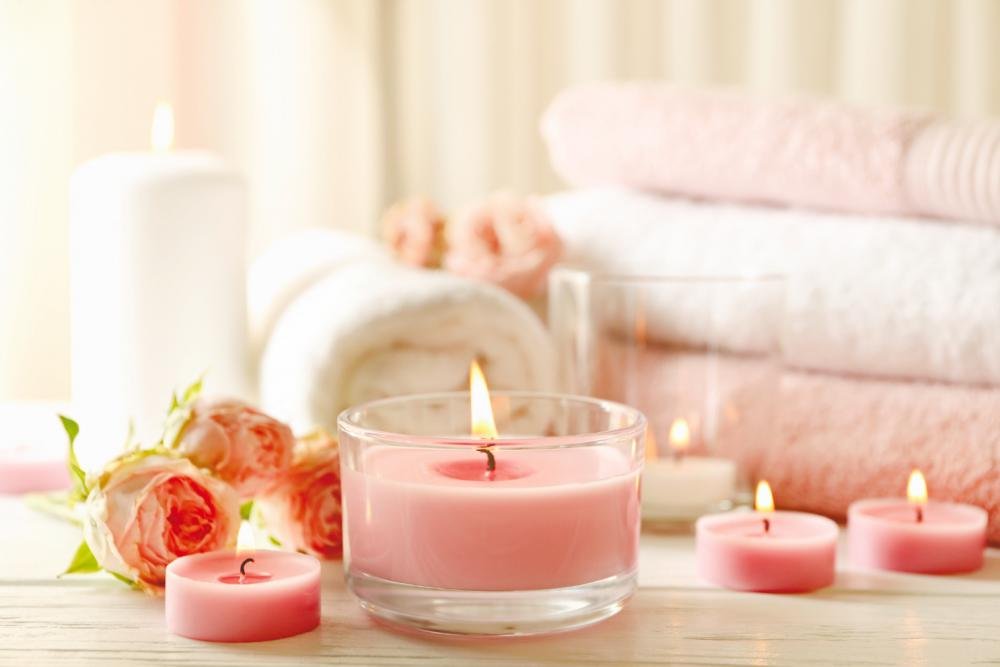
Choosing the right type of candle wax is important as different kinds of wax carry different attributes that affect burn time, fragrance throw, and appearance. For this reason, we consider the most common types of candle wax and their best use to help you better choose candle wax for your projects.
Overview of candle wax types
In addition to the above-mentioned factors, when picking a wax, environmental impact, burn time, handling, and scent retention must all be considered. Each of the above types brings different qualities into the candle-making process and could greatly affect the final product-look, feel, burn experience.
Soy Wax
Description & Benefits
Soy wax is derived from soybean oil. Therefore, it is a biodegradable and renewable wax. Such wax is often in great demand by those who would want a natural wax with a clean and even burning attribute. Soy wax has an extended burn time, very little soot production, and a gentle hold of fragrances that give candles soft scent throws that won’t overwhelm.
Weakness
Soy wax typically frosts or has a whitish crystallized effect at the top. It does not affect the candle itself but may appear different to the eye. The wax generally requires special pouring temperatures to avoid defects, which are very difficult to overcome for new enthusiasts.
Best Use
Best for container candles, especially for the eco-friendly brands or anyone interested in a natural product. Its subtle scent throw is ideal for aromatherapy candles.
Paraffin Wax
Description & Advantages
The origin of paraffin wax is petroleum. Of all waxes, it is the cheapest and most readily available wax available. It can take almost any form to cater for all candle types – be it pillar or votive candles. It boasts of an excellent scent throw ideal for heavy fragrance candles, which fill the room very fast.
Limitations:
As a petroleum-based wax, paraffin produces soot when it burns and isn’t biodegradable, which might be a disadvantage for an environmentally conscious consumer. In addition, paraffin might require careful wick selection to ensure a clean burn.
Ideal Use
It is excellent for votive and pillar candles, or any candle that needs a strong scent. It is the best seasonal or highly scented candle if scent throw is the concern.
Beeswax
Description & Benefits
Beeswax is a natural by-product that bees produce, having a rich yellow or white color and the light, sweet scent of honey. It is one of the oldest wax types used for candle making and is valued for its hypoallergenic and non-toxic qualities. Beeswax burns clean, lasts long, and gives a warm, ambient glow.
Limitation:
Beeswax is more expensive than other kinds, and the honey’s natural scent typically drowns out or clashes with added fragrances. It’s less adaptable in terms of coloring, too, because it tends to have a natural yellow tint.
Preferred Usage
Best for natural and unscented candles, as well as for anyone who wants a more earth-friendly option. It is particularly popular for religious, meditation, or allergy-friendly candles because it is so pure.
Coconut Wax
Description & Benefits
Coconut wax is a rich, luxurious wax that is extracted from coconut oil. Coconut wax burns cleanly, holding fragrance exceptionally well to give a strong, pleasant smell that lasts. Coconut wax is often used in a combination with other waxes for stability and is very widely used in high-end candles due to its smooth, quality finish.
Limitations
Coconut wax is expensive, so out of the league for those extremely budget-conscious candle makers. Its soft nature also poses a difficulty in working out candles in their own pillar.
Ideal Use
It is the best for luxury, scented container candles. Its clean-burning natural properties make it the premium choice for luxury candle lines, especially those focused on sustainability.
Palm Wax
Description & Benefits
Palm wax is one of the hardest and longest-wearing waxes that has its origin in palm oil. They produce very exceptional crystalline or feathering effects on the candle surfaces. Their strength is compounded with beauty, which recommends them for single candles especially in decorative items.
Limitations
The production of palm wax has been associated with environmental issues because of massive deforestation. Many of the candle makers seek for certified sources that are recognized as being sustainable. Second, it is harder; thus, it might melt and pour at high temperature.
Best Application
Ideal for pillar and votive candles, particularly those with decorative textures. If sustainability is a concern, be sure to select palm wax from responsible sources.
Gel Wax
Description & Benefits
Gel wax is a mineral oil and polymer resin product. It is clear, jelly-like in appearance, making it ideal for creative candle designs. It is often used to embed decorative items, such as seashells, flowers, or beads, for a 3D effect. Its transparency gives it a distinctive look that is perfect for displaying candles.
Shortcomings
The reason is that gel wax melts at a lower temperature than paraffin wax, and it sometimes causes burning problems. Also, it is not very suitable for high fragrance loads; hence, more suited for aesthetic purposes rather than fragrant candles.
Best Application:
Best for novelty or decorative candles where visual appeal is the primary concern. Good for clearly showing embedded items but not as strong for everyday use since it has a relatively poor scent hold capacity.
Blended waxes
Description and Benefits
Blended waxes can include the blending of two or more types of waxes to improve burn quality, scent throw, and stability. For instance, a soy-paraffin blend can offer the environment-friendly quality of soy blended with the scent throw capacity of paraffin and thereby can be a useful wax for various candle forms.
Limitations
Blended waxes must be tested to get the correct wax for desired results, since melt points and fragrance hold can vary considerably.
Best Applications
Blended waxes are used for beginners and advanced candle making because it can be applied with various kinds of candles, hence room for creativity and personal expressions.
Conclusion:
There are different types of wax used in candle-making, from soy and beeswax, which are used for the environment, such as high-quality coconut wax and gel wax. Trying out a few, or even blending different types of waxes, is the best way to get the right wax for the candle project.
Let’s get wax-ing. Test these waxes for which one to create candles that best serve the theme and purpose at which your style and intention best function. Enjoy!
