


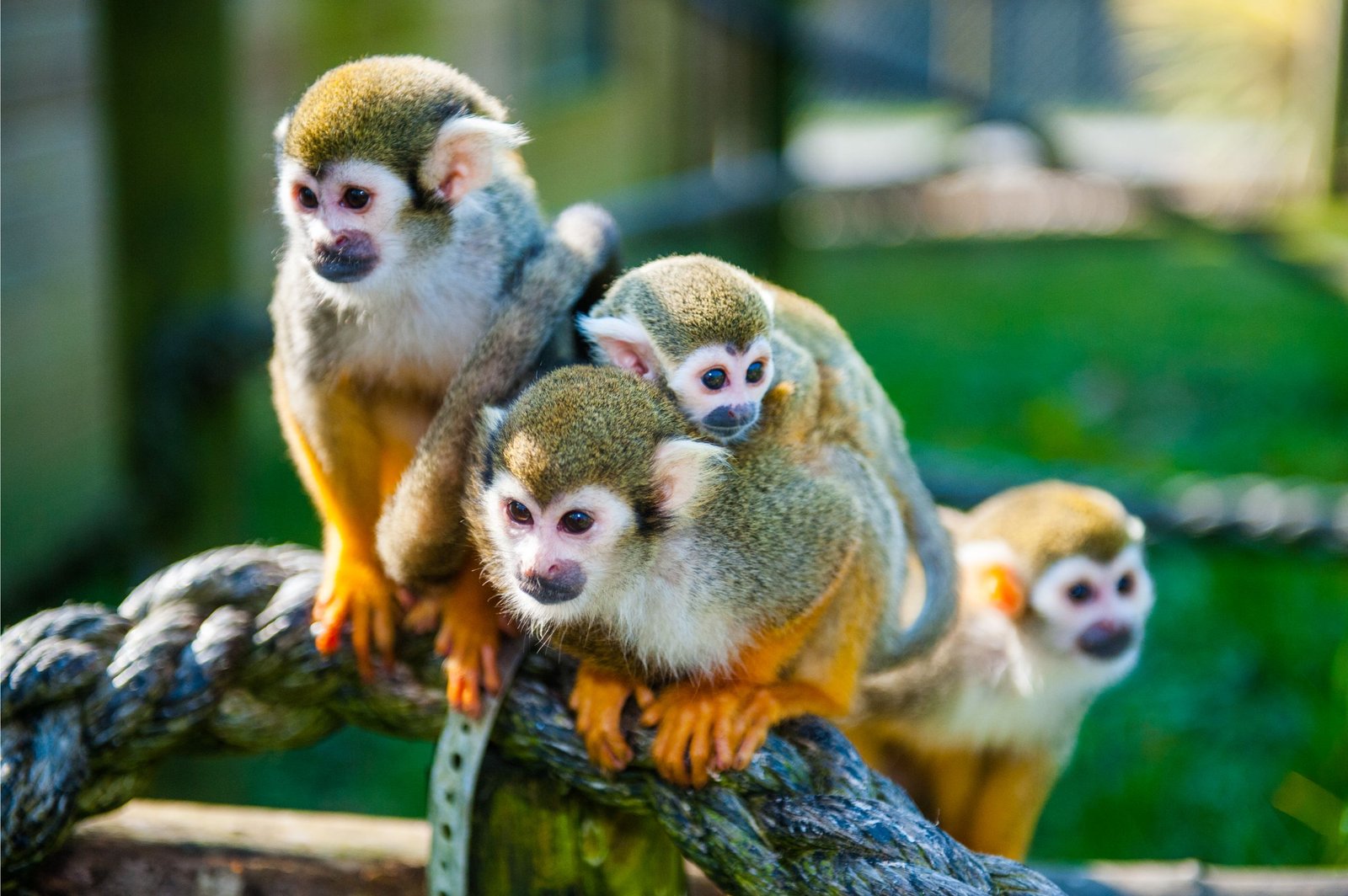
The squirrel monkey is one of the most fascinating animals in the rainforest. People often call it a “tiny acrobat” because it moves quickly and jumps high in the trees. These monkeys are small, smart, and full of energy. They live in groups and help keep the forest healthy. In this article, we will explore everything about the squirrel monkey — from its looks and behavior to its diet and habitat.
What Is a Squirrel Monkey?
A squirrel monkey is a small primate. It belongs to the genus Saimiri. These monkeys are native to Central and South America. You can find them in countries like Brazil, Colombia, and Peru. They live mostly in rainforests and tropical areas.
Key Features of the Squirrel Monkey:
- Size: About 9 to 14 inches long (not including the tail)
- Tail: Around 14 to 17 inches long
- Weight: 1.5 to 2.5 pounds
- Color: Yellowish-orange limbs with a white face and black mouth
- Lifespan: 15 to 20 years in the wild; longer in captivity
These monkeys may be small, but they are very alert and quick. Their large eyes and sharp hearing help them stay safe from predators.
Where Do Squirrel Monkeys Live?
Squirrel monkeys live in the tropical forests of Central and South America. They prefer lowland forests, swamps, and river edges. These areas are full of tall trees and vines, which make perfect playgrounds for these agile animals.
Common Locations:
- Amazon Rainforest
- Costa Rica
- Panama
- Ecuador
- Bolivia
They spend most of their time in the canopy layer of the forest. That means they live high up in the treetops. They rarely come down to the ground unless they have to.
What Do Squirrel Monkey Eat?
Squirrel monkey are omnivores. This means they eat both plants and animals. Their diet changes with the seasons. They have strong fingers and sharp teeth, which help them grab insects or pull apart fruits.
Their Diet Includes:
- Fruits
- Insects (like grasshoppers and spiders)
- Leaves
- Flowers
- Small lizards
- Bird eggs
They eat many small meals during the day. Most of their food comes from trees. They love ripe fruits and chase after bugs with great speed.
How Do Squirrel Monkeys Behave?
Squirrel monkeys are social animals. They live in large groups called troops. A troop can have 20 to 50 monkeys, and sometimes even up to 500! They move and feed together. This helps protect them from predators.
Common Behaviors:
- Grooming: They clean each other to build trust.
- Calling: They use high-pitched sounds to talk.
- Playing: Young monkeys chase and wrestle.
- Hunting: Older monkeys search for food and share it.
They are very smart and can learn patterns and solve simple problems. In fact, scientists often use squirrel monkeys in research because of their intelligence and memory.
Mating and Baby Monkeys
Squirrel monkeys have a breeding season once a year. Males grow larger during this time to attract females. After mating, the female carries the baby for about 160 to 170 days.
Baby Monkey Facts:
- Only one baby is born at a time
- The baby clings to the mother’s back
- The mother does all the care
- Babies nurse for several months
- They start eating solid food around 6 months
Young monkeys learn by watching adults. They copy movements and sounds. Soon, they join the group in hunting and playing.
How Do They Communicate?
Squirrel monkeys use many sounds and actions to talk to each other. They also use body language and facial expressions. This helps them stay close and avoid danger.
Forms of Communication:
- Squeaks and chirps: Used during play
- Alarm calls: Warn the group about predators
- Tail flicking: A sign of nervousness
- Facial expressions: Show emotion
They have more than 25 different calls. Some are loud and sharp, others are soft and gentle.
What Are Their Predators?
Squirrel monkeys are small and fast, but they are not safe from danger. Many animals prey on them. Their main defense is to stay in groups and move quickly.
Common Predators:
- Eagles and hawks
- Snakes
- Jaguars
- Ocelots
- Humans (through hunting or capture)
Birds of prey are their biggest threat. These birds can swoop down from trees before the monkey sees them.
Squirrel Monkeys and Humans
People love squirrel monkeys because they are cute and active. Some people keep them as pets, but this is not always good for the monkey. Wild monkeys need space, trees, and social groups.
Human Impact:
- Deforestation: Cuts down their homes
- Pet trade: Takes them from the wild
- Hunting: For meat or trophies
- Conservation: Some groups protect them
Many countries now ban the capture and sale of these monkeys. Zoos and wildlife parks help protect them. Scientists also study them to learn more about primate behavior.
Why Are Squirrel Monkeys Important?
Squirrel monkeys play a big role in their ecosystem. They eat fruits and spread seeds through the forest. They also eat insects, which helps control the bug population.
Their Role in Nature:
- Spread seeds for new trees
- Pollinate flowers
- Control insect numbers
- Serve as prey for larger animals
By keeping the forest in balance, they help other plants and animals survive too.
Fun Facts About Squirrel Monkeys
To make learning more fun, here are some interesting facts about squirrel monkeys:
- They can leap up to 6 feet between branches.
- Their brain is large compared to their body size — the largest of any monkey.
- They don’t use their tail for climbing, unlike some monkeys.
- They are diurnal, meaning they are active during the day.
- They have fingerprints, just like humans.
These little monkeys are full of surprises!
Are Squirrel Monkeys Endangered?
Some species of squirrel monkeys are not endangered, but others face risks. The Central American squirrel monkey is listed as endangered due to habitat loss and hunting.
Threats to Their Survival:
- Logging and agriculture
- Illegal pet trade
- Pollution
- Climate change
Conservation groups work to protect their homes and stop illegal trade. Education also helps people understand why wild animals should stay in the wild.
How Can You Help Squirrel Monkeys?
You can help squirrel monkeys by supporting conservation efforts and spreading awareness. Even small actions make a big difference.
Ways to Help:
- Donate to wildlife groups
- Visit eco-friendly parks and zoos
- Say no to wild animals as pets
- Support rainforest protection
- Share information with others
Together, we can help these amazing creatures live safe and free in the wild.
Summary
The squirrel monkey is a bright, active, and social animal. It lives in the trees of Central and South America and plays a key role in the forest. With its quick moves, sharp mind, and strong social bonds, it truly stands out in the animal kingdom.
But like many wild animals, squirrel monkeys face threats from humans and nature. By learning about them and supporting their protection, we can make sure future generations also enjoy watching these tiny acrobats swing through the trees.
